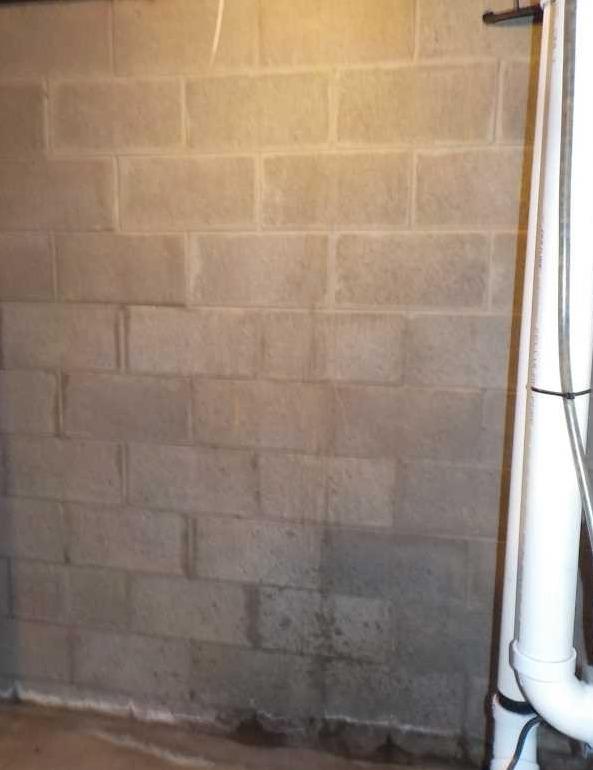
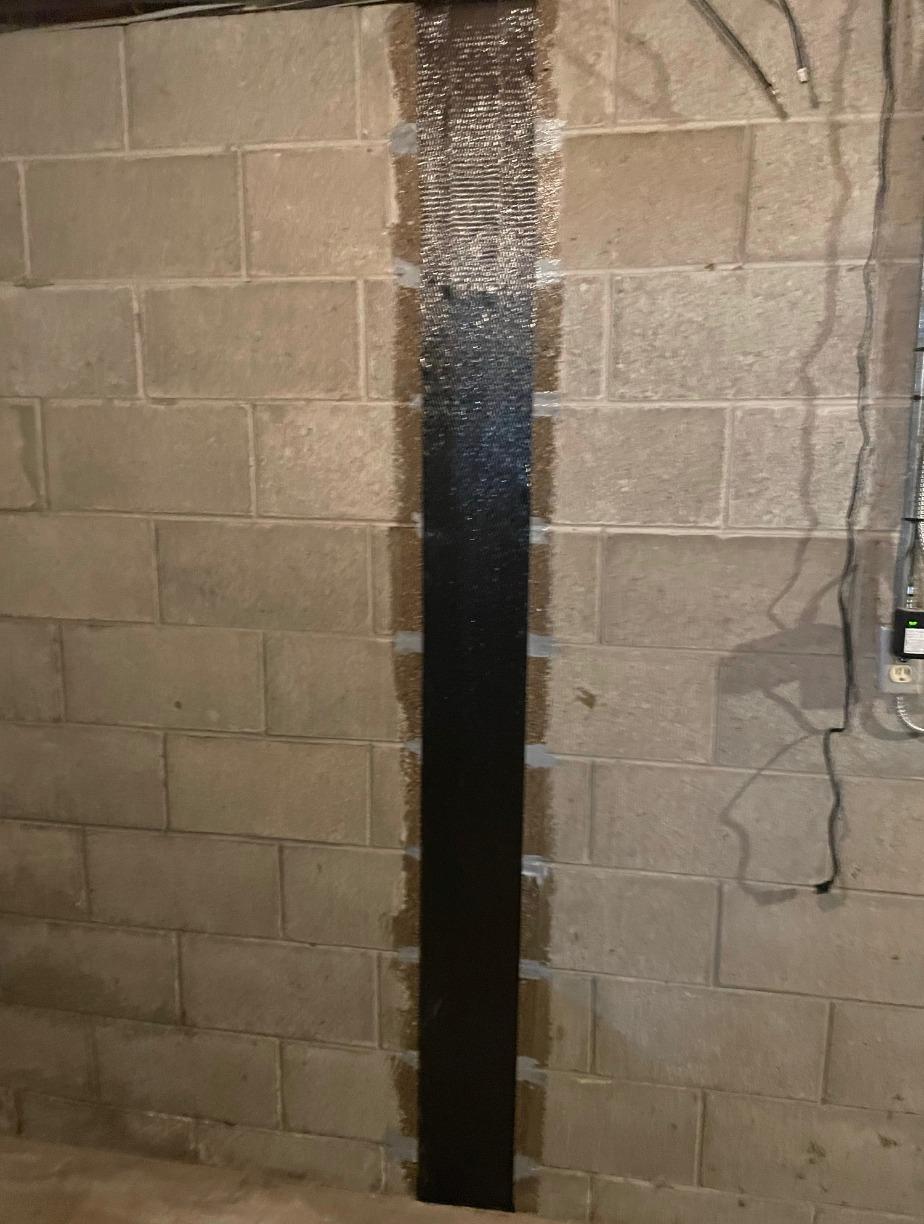
Click on a photo to enlarge.
We got a call from this Lansing, MI homeowner when he noticed that the basement walls in his rental property were starting to crumble. Horizontal cracks running down the middle of a wall, like the one in the before picture, are one of the biggest hints to a bowing foundation. The foundation had been bowing inward for some time, and when it wasn’t addressed, things only became worse. With no sign of the walls improving on their own, the owner sought out help from the foundation experts here at Ayers.
The crew was able to save several of the walls with our Geo-Lock Wall anchors. However, the one pictured was beyond repair. To keep the foundation from completely giving in on itself, the crew excavated next to the wall and replaced the crumbling stone blocks with new ones. But before the crew could take away part of the structural integrity of the home, they had to stabilize the floor above. To do so, they used our PowerBrace system in a slightly different way than usual. PowerBrace is typically set up against bowing walls and spans from the floor to the ceiling to take pressure off of the foundation walls. In this case, it was set a few feet away from the crumbling wall, so that the floor joists remained supported while the old blocks were replaced. With all the walls stable again, the owner can go back to enjoying this property worry free.
This Lansing homeowner called us when they noticed that their basement walls were tilting in and one had a crack the length of the wall. We knew this was a big issue and wanted to fix it right away. We installed PowerBraces which are great for stabilizing foundation walls that are tilting inwards. The PowerBrace Foundation Wall Repair System not only halts movement but can potentially sraighten the wall. The PowerBrace System is made up of steel beams that are secured to the joists above the wall for extra strength. This system has a very quick install and causes minimal distruabnces to the basement.
David and his wife are in their forever home and have been for many years. They wanted to home to last and to do that there were some things they needed to have fixed. They had some basement walls that were starting to bow and buckle so we stabilized the wall with CarbonArmor. The CarbonArmor Wall Reinforcing System is made out of carbon fiber straps that are secured to the wall and will keep the wall from moving any further.
Steve owns a duplex he rents to his daughter and worries about the condition of the building. He already spent money on restoring the garage with a different company, but saw that it drifted away from the main home again. Steve called Ayers and had our Foreman Evan inspect the home on his behalf due to him being out of state. After listening to Steve's concerns, he drafted a treatment plan that would reintroduce stability to the home's foundational soil and prevent further drifting.
Evan and his team installed a Helical Pier system to stabilize the home. The piers are installed by excavating the outer perimeter of the home and driving screw-shaped steel beams into the ground at an angle, past the weak soil, and into the frim ground. The tops of the beams are fitted with loadbearing concrete blocks that the entire home rests on.
After placing a bid on this St. Johns, MI home the prospective buyers noticed the slight curve the wall in the before photo. A bend like this, no matter how small, is usually a sign that walls are dealing with pressure from expanding soil and starting to bow. Before they purchased the home, the new homeowners wanted to guarantee that they would be safe.
Our PowerBrace system gave them the peace of mind they were looking for. The beams in the after photo are a large part of the system. As you can see, the PowerBrace beams expand from ceiling to floor. Once the beams are tightened with a special bolt that connects them to the floor joists, they will stop the inward bowing motion. Given enough time, PowerBrace may even straighten the walls back to their original position.
 1-866-909-4086