Click on a photo to enlarge.
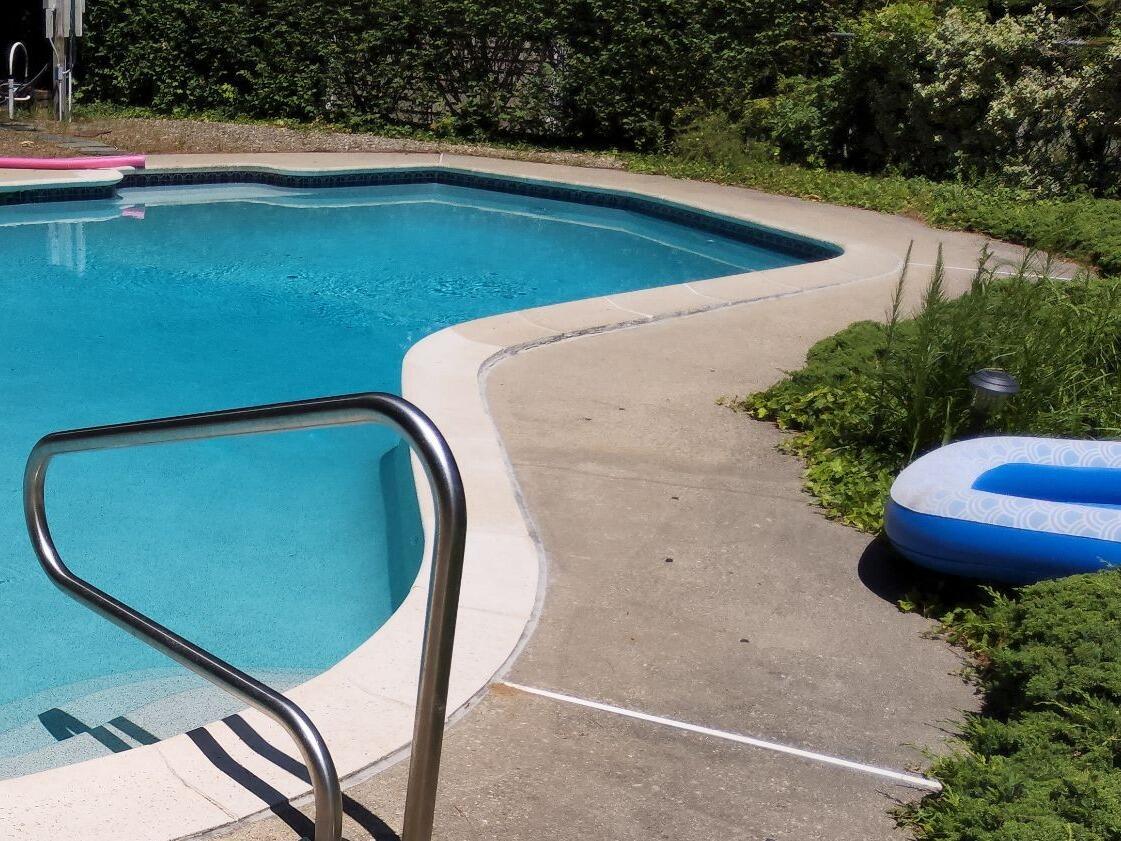
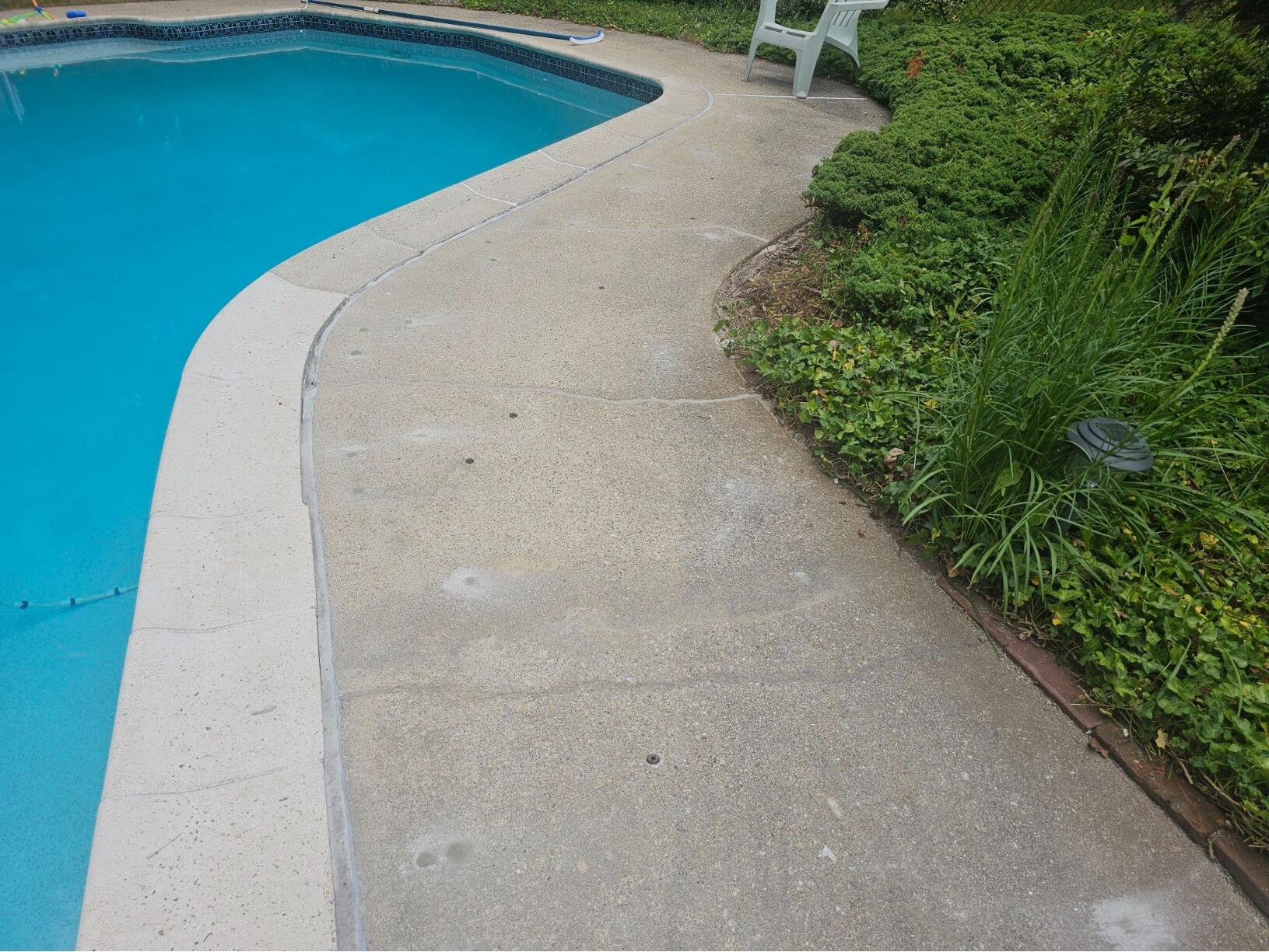
In Duxbury, MA, a homeowner contacted us with a sinking concrete issue near their pool deck coping, which posed a trip hazard. As seen in the before photo, the uneven surface presented safety concerns. We utilized the PolyLevel® system to rectify the situation, drilling small holes and injecting high-strength polyurethane foam beneath the concrete slab. This professional method allowed us to stabilize and precisely lift the slab, thoroughly eliminating the hazard. The after photo exhibits our success in achieving a stable, level surface, demonstrating our commitment to permanent solutions and top-tier service.
This homeowner in Plymouth, MA wanted to make repairs to several areas around their inground pool. Several sections were sunken or uneven, the surface was dirty and full of weeds, and the cracks and joints were not properly sealed.
Our team addressed all the concerns for the homeowner, and successfully made repairs in all the necessary areas of the concrete. This before and after highlights one section receiving repairs near the stairs of the pool. The homeowner was very pleased with the results, and glad to have a safe area around the pool for their family.
Two factors were leading this concrete patio in Plymouth, MA to sink and settle. First, the soil beneath the concrete was eroding way due to rain water flowing through. Second, the weight of the hot tub was adding extra pressure to the slab. The with slab unsupported beneath and the extra weight of the tub, the concrete patio began to sink, crack, and settle. The homeowner was worried this would eventually also cause their retaining wall to bow out or completely collapse.
Our team filled the voids beneath the concrete with PolyLevel, which successfully lifted and stabilized the slab. This polymer material is incredibly strong and will have no issues supporting the weight of the hot tub. With the voids filled and the concrete properly supported, there is no longer any risk of the retaining wall failing. Rather than replace all the concrete and having to rebuild the retaining wall, this was a cost effective, ideal solution for the homeowner and provided them with much needed peace of mind.
In Plymouth, MA, unique pool deck challenges met their match. Notice in the before photo how the uneven sunken slabs disrupted the beauty of this homeowner’s pool area. Our skilled team came to the rescue utilizing PolyLevel® for a clean and precise lift. As you can see in the after photo, we’ve restored harmony, ensuring a safer, level surface around the pool. Experience firsthand how we offer not just repair, but peace of mind with durable, seamless results.
A homeowner from Concord, New Hampshire had an extremely wet basement. Even with a sump pump already installed, water still made its way through the foundation. The homeowner is sick of dealing with the seepage and doesn't want the next owner of the home to have the same experience. She reached out to Erickson Foundation Solutions looking for a permanent solution for her leaky basement.
One of our Design Specialists, Anthony Brancato, went to the house to provide a free home inspection. After taking a thorough look at the basement, Anthony recommended installing our WaterGuard perimeter drainage system to the already existing sump pump. Although the sump pump works properly, it is unable to waterproof the basement on its own due to the amount of water in the soil surrounding the foundation. The WaterGuard perimeter drainage system actually allows the water to flow right into the system, and directs it right to the sump pump. By letting the water flow right into the perimeter drainage system, water doesn't build up on the outside of the foundation, which is what causes the leaks.
With the system in place, a waterproofed basement has been created. The homeowner can now have peace of mind while she lives in the home and goes through the home selling process.
 1-866-909-4086